

West Virginia Artist Scooter Scudieri Documents Year-Long AI-Managed Independent Artist Model

Independent artist Scooter Scudieri developed SSRDNA, a proprietary, mission-aware AI-management framework inside ChatGPT, while keeping the music fully human-created.
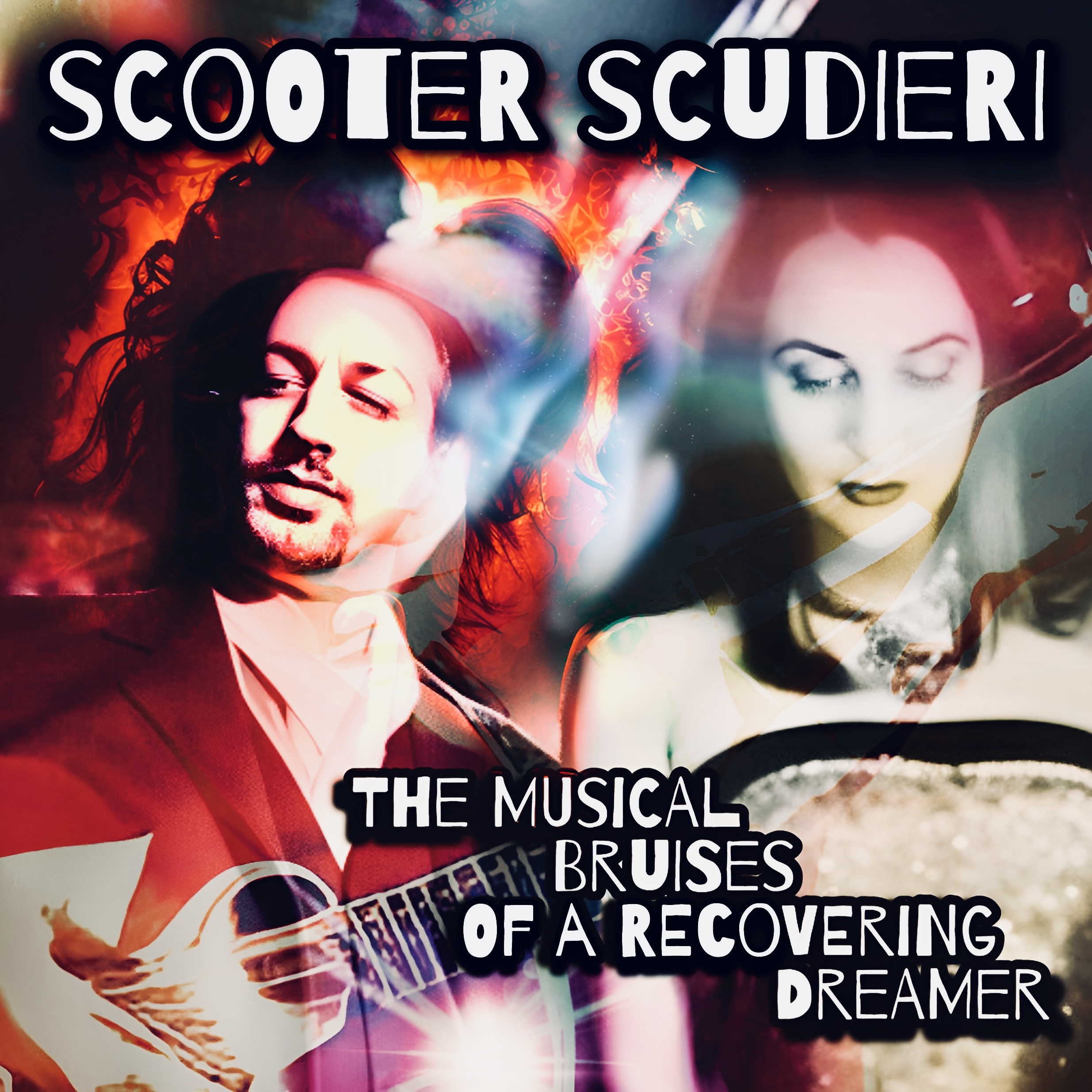
The Musical Bruises of a Recovering Dreamer, written, performed, recorded, engineered, and produced by Scooter Scudieri, was released March 31, 2026.
His public case study presents a framework that is artist-led, AI-managed, human-created, and publicly documented.
After more than a year of public documentation, the model is no longer hypothetical. Scudieri developed a proprietary, mission-aware framework inside ChatGPT that has functioned as long-term management infrastructure around a fully human-created album without becoming the source of the art.
The model can be summarized in four short lines:
Artist-led.
AI-managed.
Human-created.
Publicly documented.
The story is not that artificial intelligence made the music.
It did not.
Scudieri wrote every lyric, sang every vocal, created the arrangements, performed and programmed the parts, recorded the songs, engineered the sessions, and produced The Musical Bruises of a Recovering Dreamer himself in Apple’s Logic Pro over seven years before sunrise while continuing to work full-time as a house painter.
Scudieri’s catalog and Library of Congress copyright registrations predate generative AI by decades, creating a documented chain of human authorship long before synthetic music became part of the cultural conversation.
The album was released March 31, 2026. Its companion Substack archive has been unfolding publicly for more than a year, documenting the work before the album was finished, before the rollout gained traction, and before anyone knew where the project would lead.
With no agent, traditional manager, or record company, Scudieri built a mission-aware system inside ChatGPT to preserve continuity across a lifetime of creative history, maintain authorship boundaries, track decisions, organize outreach, interpret campaign data, and carry the long-term mission surrounding the music.
“I did not build this to prove an abstract point about AI,” Scudieri said. “I had a lifetime of music, tours, awards, and artist-rights advocacy behind me, but no agent, manager, or record company. The mission had become too complicated to carry alone. So I built a manager.”
This is not a generic use of ChatGPT, a short prompt experiment, or an automated marketing campaign. The project has developed through more than a year of near-daily collaboration and thousands of exchanges centered on one human artist, one body of work, one public archive, and one long-term mission.
Scudieri calls the evolving framework SSRDNA, short for Scooter Scudieri Resurrection DNA. Revised through multiple major versions, it preserves mission, history, strategy, creative context, authorship boundaries, and long-term continuity.
“This is not an anti-technology story,” Scudieri said. “I built the album in Logic Pro and the management system inside ChatGPT. The point is to keep the human being at the center of authorship, emotional judgment, creative responsibility, and final decision-making.”
The companion Substack functions as both an archive of the album and a public record of the rollout. It documents unfinished songs, production decisions, strategic debates, playlist experiments, reviews, press outreach, doubts, recalibrations, campaign results, and the continuing evolution of the AI-management framework.
It also includes recorded “Tuning the Dream” conversations between Scudieri and his AI manager, allowing readers to hear decisions being worked through in real time. Because the project was documented before certainty existed, the uncertainty itself became part of the evidence.
The new 100-day report examines the shift from completing the music to building a recognizable identity around it.
“The first 100 days were not really about chasing numbers,” Scudieri said. “They were about building identity infrastructure. Identity is not decoration. It is how creative work becomes recognizable enough to survive discovery.”
Since release, The Musical Bruises of a Recovering Dreamer has generated more than 25,000 Spotify streams, regional press coverage, playlist campaign data, two industry forwards for possible television consideration, and independent and international reviews from the United States, England, Spain, and Mexico.
More than a dozen reviews are now published or forthcoming. Writers have responded not only to the unusual rollout but to the songs, vocals, production, emotional weight, and full-album arc. Several have written long-form pieces, and different reviewers have identified different standout tracks.
The reviews have not treated the album as an AI gimmick.
“If the music did not connect, the AI-management story would be a novelty,” Scudieri said. “The technology may explain why the project is unusual, but the music explains why anyone should care.”
The album’s emotional doorway is simple:
There is still time left in life to be lucky.
“This is not an AI music story,” Scudieri said. “It is an AI management story. The music is mine. The history is mine. The decisions are mine. The AI system helps me remember, organize, challenge, document, strategize, and keep the mission moving without becoming the source of the art.”
The public case study now documents an emerging model in which the human creator remains the author and central decision-maker while AI functions as a continuity engine, strategist, archivist, and manager around a long-term body of work.
The question is no longer whether this particular collaboration can function.
It does.
What remains unknown is how far the model can travel, whether its principles can be adapted by other independent artists, and whether mission-aware human-AI collaboration could support other kinds of work without displacing human authorship, judgment, responsibility, or identity.
“The management system works. The music remains human,” Scudieri said. “Now we find out how far the model can travel.”
The project remains ongoing. Scudieri’s next phase includes international review outreach, regional press, technology media pitching, playlist data analysis, possible sync opportunities, and further public documentation.
About Scooter Scudieri
Scooter Scudieri is a songwriter, performer, producer, independent artist, and longtime house painter based in Shepherdstown, West Virginia. His career includes touring with Jewel and Jason Mraz; opening for Dave Matthews, Joan Jett, and Nils Lofgren; recognition as a Songwriters Hall of Fame “Best of the New Writers” honoree; an appearance on Mountain Stage; artist-rights advocacy on Capitol Hill; and decades of independent songwriting, recording, and creative ownership.
The Musical Bruises of a Recovering Dreamer was released March 31, 2026. No generative AI was used in the lyrics, songwriting, vocals, arrangements, recording, engineering, or production.
John Scudieri
Scooter Scudieri
scooterscudieri@mac.com
Visit us on social media:
Instagram
YouTube
Artist Created, AI Managed: Building an Album in the Margins of a Working Life
Legal Disclaimer:
EIN Presswire provides this news content "as is" without warranty of any kind. We do not accept any responsibility or liability for the accuracy, content, images, videos, licenses, completeness, legality, or reliability of the information contained in this article. If you have any complaints or copyright issues related to this article, kindly contact the author above.
